
History of FIPPI
The FIPPI Story
The Federation Story – Six Decades of Leadership & Advocacy
Six Decades, in Milestones
- 1961FIPPI inaugurated in Calcutta on 2 November by Shri Manubhai Shah, Union Minister of Industry.
- 1962Membership grows from seven founding manufacturers to 16.
- 1963Headquarters move to New Delhi in July; first overseas market study proposed and approved.
- 1966First FAO Committee on Wood-Based Panels session in Rome, attended by P.D. Chitlangia.
- 1968Plywood Exhibition at the IX Commonwealth Forestry Conference; VI AGM; IPIRA Field Station inaugurated at Calcutta; second FAO session.
- 1969Registration in Delhi; VII Annual General Meeting inaugurated by Shri K.K. Shah.
- 1972FAO’s first World Consultation on the Panel Product Industry of Afro-Asian Countries held in New Delhi.
- 19753rd World Consultation on Wood-Based Panels, jointly organised by FAO and Government of India.
- 1980FAO project to modernise the Indian plywood and panel industry begins, implemented through FIPPI.
- 1993National Seminar on Raw Material Supply with IIFM Bhopal; Development Council for Plywood constituted.
- 2005–11PanelExpo, a landmark forum, brings global and domestic stakeholders together.
- 2024Vision, Mission and Five Thematic Goals formally articulated.
Genesis & Foundations
From an idea in 1961 to the apex body of India’s plywood and panel industry
The journey of the Federation of Indian Plywood and Panel Industry (FIPPI) reflects the evolution of India’s wood-based panel sector itself — a narrative shaped by entrepreneurship, policy transitions, material innovation, and collective purpose. Established at a time when India was laying the foundations of self-reliance, FIPPI emerged as the unified voice of an industry poised for national contribution.
Over six decades, it has grown from an industry forum into an institution that bridges government and enterprise, advances sustainable practices, champions technological progress, and strengthens India’s position in the global panel landscape.
This chapter traces the institutional evolution of FIPPI as the collective voice of India’s plywood and panel industry — highlighting its role in policy advocacy, standard-setting, industry coordination, and sustainability leadership over six decades.
Genesis of FIPPI – From Idea to Institution
As India’s plywood industry began expanding beyond regional boundaries, it became increasingly evident that fragmented representation could no longer address the sector’s growing challenges. While regional plywood manufacturers’ associations worked effectively within their respective geographies, the industry required a common national platform — one that could coordinate policy engagement, promote scientific development, support exports, and represent the collective interests of wood-based industries before the Government.
This vision led to the formation of the Federation of Indian Plywood & Panel Industry (FIPPI), the apex representative body of India’s plywood and panel sector. FIPPI was formally inaugurated on 2 November 1961 in Calcutta by Shri Manubhai Shah, the then Union Minister of Industry, Government of India. From its inception, the Federation was recognised by the Government as the All-India voice of the plywood and wood-based panel industry and positioned the Federation as a credible platform with national resonance.
A Strategic Shift to the National Capital
As policy formulation and regulatory decisions increasingly emanated from Central Government offices, FIPPI’s leadership recognised the need for closer engagement with national institutions. Accordingly, the Federation shifted its headquarters from Calcutta to New Delhi in July 1963 — placing itself closer to key ministries and enabling direct dialogue with government departments on transport, customs duties, forest conservation, environmental norms, and tree plantation policies.
The Federation was subsequently registered in the Union Territory of Delhi, receiving its certificate of registration from the Registrar of Societies in 1969. This strategic relocation strengthened FIPPI’s role as an effective bridge between industry and government.
Founding Objectives: Institution Building for an Industry
FIPPI was conceived not merely as an association, but as an institution to guide the scientific, economic, and structural development of India’s plywood and panel industry. Its founding objectives were broad and forward-looking, encompassing:
Coordination
Among plywood factories and regional associations.
Government liaison
With Central and State Governments on policy, forestry, taxation, transport and trade.
Quality & standards
Promotion of quality, standardisation and scientific manufacturing practices.
Markets & exports
Market research, publicity and export development.
Research & skills
Encouragement of research, innovation and skill development.
Fair practice
Prevention of unhealthy competition and sub-standard production.
Together, these objectives laid the foundation for a cohesive, responsible wood panel industry in India.
Membership: Strength Through Representation
FIPPI began its journey with seven manufacturer members, gradually expanding as the value of collective representation became evident. By 1962, the Federation had grown to 16 members, and over the decades, its reach expanded steadily. Membership was structured into three categories:
Ordinary Members
Manufacturers of plywood and other wood-based panel products.
Associate Members
Traders and allied industries.
Affiliated Members
Regional associations of wood-based panel manufacturers.
Torchbearers of Progress
Presidents who defined the path
Institutions endure because of ideas — but industries advance because of people.
FIPPI’s story is also the story of its leaders — visionaries who expanded its reach, strengthened advocacy, and guided the industry through evolving economic, environmental, and regulatory landscapes. Together, these leaders did not merely guide FIPPI; they shaped an industry. Through their vision, resilience, and unwavering commitment to science, quality, and sustainability, they ensured that the Indian plywood and panel sector evolved on firm foundations — capable of competing globally while serving national priorities.
Each President left a distinctive imprint — from strengthening export competitiveness to driving standardisation, advancing sustainability, and deepening government-industry cooperation.
Dr. D. Narayana Murti
Father of Composite Wood Research in India · Founding Director, IPIRTI, Bengaluru
At the very core of this journey stands Dr. D. Narayana Murti, universally acknowledged as the Father of Composite Wood Research in India and the founding Director of IPIRTI, Bengaluru. His pioneering scientific work transformed plywood and panel manufacturing from a craft-based activity into a technology-driven industry. By establishing IPIRTI as a national hub for research, training, and innovation — alongside industry visionaries such as Shri K.S. Lauly, Shri A.K. Kaderkutty, and Shri M.M. Jalan — Dr. Murti ensured the availability of trained managers, technologists, chemists, and researchers who would run the industry on sound scientific principles.
His contribution remains unparalleled, earning him rightful recognition as one of the founding fathers of the Indian plywood industry itself.

Shri A.K. Kaderkutty
Founding President · Western India Plywoods Ltd.
FIPPI’s leadership legacy is equally defined by its founding President, a visionary who combined industrial entrepreneurship with institution-building. As Founder President of FIPPI and a key force behind IPIRTI, he played a seminal role in shaping policy, standards, and technology adoption across the sector. Serving as President for two terms, Shri Kaderkutty was actively involved in nearly all committees responsible for formulating Indian Standards for wood-based panel products.
In 1945, he started The Western India Plywoods Ltd., at Baliapatam, which has grown by leaps and bounds and is today one of the biggest wood based industrial complexes in the country. The promotion and the tremendous success of the company is undoubtedly linked to the initiative, foresight and the scientific bent of mind of Sri A.K. Kaderkutty. His insistence on quality, standardisation, and indigenous capability gave the industry a strong scientific and regulatory backbone.
He was also a pioneer in manufacturing high-end products such as hardboard and knock-down furniture, and among the first to establish in-house R&D facilities and indigenous resin plants producing PF, UF, and MUF resins in India.
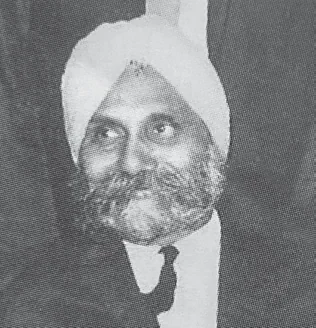
Shri K.S. Lauly
Pioneer of value-added panel products
Shri K.S. Lauly served as President for one term and was a pioneer in value-added, high-technology panel products. He led the way in manufacturing compregs, flat particle boards, and tubular particle boards, demonstrating that Indian manufacturers could match global technological benchmarks. His contributions reinforced the industry’s confidence in innovation-led growth.
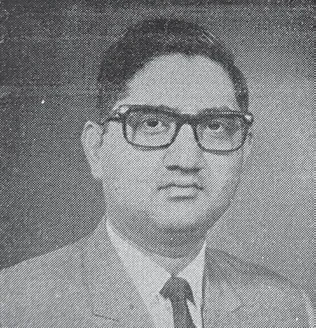
Shri P.D. Chitlangia
Sarda Plywood Industries Ltd. (now Duroply Industries Ltd.)
Equally influential in shaping the industry’s scientific and quality foundations was Shri P.D. Chitlangia. He was one of the most influential figures in the formative years of India’s plywood and panel industry, known for his unwavering commitment to quality, research, and institutional development. As the driving force behind Sarda Plywood Industries Ltd. (now Duroply Industries Ltd.), established in 1957, he helped build one of India’s earliest and most respected plywood brands.
Beyond enterprise leadership, Shri Chitlangia rendered exceptional service to the industry as the longest-serving Chairman of the Indian Plywood Industries Research & Training Institute (IPIRTI), where his strong scientific orientation and insistence on research-led manufacturing significantly shaped the industry’s technical foundations. His tenure strengthened IPIRTI’s role as a national centre for testing, training, and innovation, embedding a culture of quality assurance and continuous improvement across the sector.
As President of FIPPI, he also represented India internationally, including participation in the FAO Committee on Wood-Based Panel Products in Rome in 1966 — one of the earliest global engagements of Indian plywood leadership.

Shri M.M. Jalan
A living legend of the Indian plywood industry · Arunachal Plywood Industries Ltd.
A special and enduring place in FIPPI’s history belongs to Shri M.M. Jalan. Serving as President for five terms — during some of the most turbulent years the industry has faced — Shri Jalan’s leadership proved decisive, particularly during the aftermath of the 1996 Hon’ble Supreme Court judgment that brought forest-based industries in the North-East to a near standstill.
At a time when many entrepreneurs chose to relocate, Shri Jalan remained in Arunachal Pradesh, steadfastly pursuing the industry’s cause. For over three years, he relentlessly engaged with the Hon’ble Supreme Court, often at great personal and business cost, to safeguard the future of the sector. His later pioneering work in bamboo composite boards further expanded the material base of India’s panel industry, aligning innovation with sustainability.
Collectively, these stalwarts rendered yeoman service to the industry by encouraging the indigenous development of plywood and panel manufacturing machinery — ranging from veneer lathes, dryers (roller, jet, band, and veneer dryers), vertical slicers, glue spreaders, DD saws, multi-daylight hydraulic presses, to extrusion technologies for tubular particle boards. They were also among the first to establish state-of-the-art in-house R&D facilities and resin plants, enabling the domestic production and use of thermosetting synthetic resins and elevating Indian manufacturing standards.
Their influence extended beyond national boundaries. In 1972, owing largely to their untiring efforts, the United Nations’ FAO organised the first World Consultation on the Panel Product Industry of Afro-Asian Countries in New Delhi — an event that firmly positioned India on the global map of wood-based panel manufacturing.
Carrying this formidable legacy into the modern era, FIPPI entered a phase of institutional consolidation, sustainability-led growth, and global alignment under the long and impactful stewardship of Shri Sajjan Bhajanka.

Shri Sajjan Bhajanka
Longest-Serving President of FIPPI (2004–2024) · Century Plyboards (India) Ltd.
A name synonymous with progress, Shri Sajjan Bhajanka represents a defining phase in FIPPI’s leadership. Rising from modest beginnings in Assam to becoming one of India’s foremost industrialists, his journey reflects resilience, foresight, and a deep commitment to sustainable nation-building. Beginning with a small veneer unit in Tinsukia, Assam, he co-founded Century Plyboards (India) Ltd. in 1986, which under his leadership emerged as India’s leading manufacturer of plywood, MDF, laminates, and particleboard — setting benchmarks in quality, innovation, and sustainability.
Shri Bhajanka is the longest-serving President in FIPPI’s history, leading the Federation for nearly two decades during a period of major regulatory and environmental transition. He firmly embedded sustainability into industry strategy by championing agroforestry and Trees Outside Forests (ToF), reducing reliance on natural forests.
As a Board Member of IPIRTI and Chairman of its Research Advisory Committee, he promoted productivity enhancement, waste reduction, and quality improvement. Under his leadership, FIPPI worked closely with MoEF&CC and other government bodies, played a key role in aligning BIS standards with international benchmarks, advanced eco-certification, skill development, and encouraged the adoption of MDF and particleboard to ease pressure on forest resources.
His contributions have been widely recognised, including the Lifetime Achievement Award, Best CEO Award (Business Today, 2023), and Honorary D.Litt. degrees. In 2025, he was conferred the Padma Shri, honouring his outstanding service to India’s plywood and panel industry.
Sarvada Sarvottam — The Best, Always.
Shri Sajjan Bhajanka’s guiding philosophy
Guided by this philosophy, Shri Sajjan Bhajanka’s presidency marked FIPPI’s transition into a modern, sustainability-driven, globally aligned institution — leaving a legacy that continues to shape the industry’s future. The legacy forged by these pioneering leaders became the enduring foundation upon which successive Presidents of FIPPI have continued to build. Their collective vision transformed FIPPI from a fledgling association into a resilient, institutionally respected voice of the industry — anchored in scientific rigor, policy engagement, and collective responsibility.

Shri Rajesh Mittal
Present President · Greenply Industries Ltd.
At present, the Federation is led by Shri Rajesh Mittal, under whose Presidentship FIPPI has continued its forward momentum. In the past year, his guidance has further strengthened the Federation’s institutional presence, enhanced stakeholder engagement, and reinforced its commitment to standards, sustainability, and industry advocacy — building steadily upon the strong foundations and guiding the Federation with continuity, credibility, and purpose.
All Presidents of FIPPI
Tap a portrait to enlarge it.
- A.K. Kaderkutty1961–63Western India Plywood Ltd., Kerala01
- G.L. Kedia1964–65Jayshree Timber Products, Kolkata
 02
- P.D. Chitlangia1966–67Duroply Industries Ltd. (formerly Sarda Plywood Industries Pvt. Ltd.), Kolkata
 03
- H.K. Vissanji1968–69Indian Plywood Manufacturing Co. Ltd., Mumbai
 04
- B.K. Khaitan1970–71Andamans Timber Industries Ltd., Kolkata
 05
- L.N. Dokania1972–73Palghar Plywood Products Ltd., Bombay
 06
- A.K. Kaderkutty1974–75Western India Plywood Ltd., Kerala07
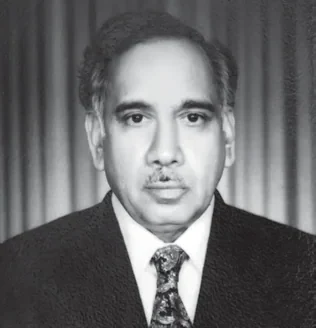
- B.N. Kapur1976–77Crossley & Towers (P) Ltd., Kolkata
 08
- M.M. Jalan1978–79Arunachal Plywood Industries Ltd., Kolkata09
- H. Thomson1980–81Plywood Products, Sitapur
 10
- S.L. Goenka1982–83Arunachal Forest Products Pvt. Ltd., Kolkata
 11
- K.S. Lauly1984–85Indian Plywood Manufacturing Co. Ltd., Mumbai12
- M.L. Periwal1986–87National Plywood Industries Ltd., Kolkata
 13
- H.V. Sarda1988–90Wood Craft Products Ltd., Kolkata
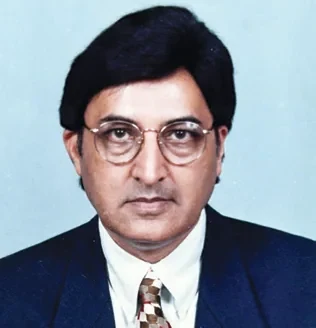 14
- M.M. Jalan1991–2000Arunachal Plywood Industries Ltd., Kolkata15
- S.P. Goenka2001–04Kitply Industries Ltd., Kolkata
 16
- Sajjan Bhajanka2004–24Century Plyboards (India) Ltd., Kolkata17
- Rajesh Mittal2024–PresentGreenply Industries Ltd., Kolkata18
Shaping an Industry
FIPPI’s role in the formative years
In its earliest years, the Indian plywood industry was largely driven by the requirements of tea packaging. However, as manufacturing capabilities matured, it became evident that the industry could evolve well beyond this limited application — serving domestic civilian and defence needs and eventually competing in international markets. Recognising this latent potential, the Federation of Indian Plywood & Panel Industry (FIPPI) emerged as a catalyst, guiding the industry’s transition from a narrow functional role to a diversified industrial sector.
Early Export Vision and Global Outreach
One of FIPPI’s earliest and most consequential initiatives came in 1963, when the Federation proposed an overseas market study to explore export opportunities for Indian plywood. The proposal was accepted by the Ministry of Commerce, Government of India, which extended financial support through a grant of ₹10,000 from the Plywood Industry Voluntary Cess (PIVC) Fund.
Subsequently, a five-member Indian plywood delegation, led by Late Shri A.K. Kaderkutty, undertook a market study tour covering West Asia, East Africa, and the United Kingdom. The visit proved to be a landmark effort, resulting in confirmed export orders worth ₹6,62,345 — secured despite intense international competition. Beyond immediate commercial gains, the delegation’s detailed report provided valuable inputs that helped the Government shape export policy for plywood and allied products across both developing and developed markets.
Encouraged by this success, FIPPI institutionalised export promotion by systematically collecting overseas import data through Indian embassies. Information on buyers, consumption trends, quality standards, packaging requirements, and pricing was regularly shared with members. In parallel, the Federation kept the industry informed of technological developments in leading global wood-based sectors.
To further strengthen international visibility, FIPPI initiated the development of a dedicated publicity brochure on Indian plywood. Supported by a grant of ₹21,000 from the Government of India’s Marketing Development Fund — supplemented by a ₹7,000 contribution from the Federation — the professionally produced brochure was widely circulated among foreign buyers and Indian missions abroad. This effort not only generated sustained export enquiries but also facilitated greater exposure to global technologies and best practices.
Institutional Representation & Global Policy Engagement
FIPPI played a key role in policy advocacy and institutional engagement at both national and international levels. The Federation was an active member of the Plywood Industry Voluntary Cess Committee, and its leadership represented India at global forums, including the FAO Committee on Wood-Based Panel Products. The Ministry of Food & Agriculture nominated the President of FIPPI as India’s representative, with the first FAO session held in Rome from 12–14 December 1966, attended by Mr. P.D. Chitlangia, the then President of FIPPI & Managing Director of Sarda Plywood Industries Limited.
The second session of the FAO Committee, held in Rome from 6–8 November 1968, was attended by the then President of FIPPI, Shri H.K. Vissanji, who actively participated in the deliberations and presented two technical papers at the FAO’s invitation.
Members of the FAO Committee on Wood-Based Panels
Recognition, Advocacy & Standards
Meetings, exhibitions, consultations and policy wins
National Recognition and Industry Confidence
FIPPI’s growing influence was also reflected in strong governmental engagement in the country. The Sixth Annual General Meeting of the Federation of Plywood Industry was held on 2nd April 1968 and was inaugurated by Shri Fakhruddin Ali Ahmed, the then Union Minister for Industrial Development and Company Affairs. The Minister highly appreciated the work undertaken by the Federation and observed that organisations such as FIPPI could play a vital role in promoting the use of wood-based panels and in addressing imbalances in the utilisation of forest resources.
VI Annual General Meeting of the Federation
The Seventh Annual General Meeting of the Federation was held on 16 April 1969 and was inaugurated by Hon’ble Shri K.K. Shah, the then Minister of Health, Family Planning, Works, Housing & Urban Development. The Minister commended the industry’s proactive steps toward quality assurance, particularly the establishment of research laboratories in Bangalore and Calcutta. Expressing strong confidence in the sector’s future, he remarked:
With the spirit of co-operation that I find pervading amongst the producers of your industry and the far-sighted policies which the Federation is following in handling the vital subjects like the Industry’s Voluntary Cess, I have no doubt Mr. President that the Indian Wood Panel Industry will continue to make valuable contributions in the uplift of the economy of the country.
Hon’ble Shri K.K. Shah, VII Annual General Meeting, 1969
VII Annual General Meeting of the Federation
Policy Advocacy and Capacity Building
On the domestic front, the Federation maintained close coordination with key government bodies such as the Directorate General of Technical Development (DGTD). Through persistent representation, FIPPI contributed to several important policy outcomes — including the ban on export of rosewood logs, reduction in excise and import duties, and reclassification of the wood-based industry from Schedule IV to Schedule I. With efforts of the Federation the Government permitted the import of huge quantity of logs from 1985 to conserve the indigenous forest resource.
In view of shortage of formaldehyde resins, on request and initiative of the Federation, the Ministry of Commerce, Government of India had included “Methanol” in the shopping list of plywood exporters vide Public Notice No. 196-ITC/(PN)73 dated 19.11.1973 issued by the Chief Controller of Import & Exports, to enable exporters of plywood to import methanol through STC (State Trading Corporation) against Advance/REP Release order and get it converted to formaldehyde and/or resin adhesive for plywood manufacturing units.
Exhibitions, Consultations, and Knowledge Platforms
The Federation actively promoted Indian wood-based products through national and international platforms. It secured exhibition space at the National Building Organisation (NBO) Display Centre, where a curated display of timber products received high appreciation from the Hon’ble Minister of Works, Housing & Urban Development. Building on this visibility, FIPPI organised a dedicated Plywood Exhibition at the NBO, New Delhi, at the New Assembly Hall during the IXth Commonwealth Forestry Conference, held from 16–25 January 1968.
The Federation further expanded its international outreach by participating in the 3rd Asian International Trade Fair (Asia ’72) at Pragati Maidan, New Delhi, in collaboration with CAPEXIL. In parallel, a Federation representative participated in the ILO Tripartite Technical Meeting on the Woodworking Industry in Geneva, serving as an Employees’ Delegate nominated by the All India Organisation of Industrial Employees.
FIPPI also played a significant role in global technical consultations. It was an active member of the Indian Organising Committee for the 3rd World Consultation on Wood-Based Panels, held in India from 6–16 February 1975, which was jointly organised by the Food and Agriculture Organization (FAO) and the Government of India. The Federation participated in the consultation in close collaboration with industry members.
In 1979, at the request of the Government of India, FAO approved a project under its Technical Cooperation Programme to assist in the modernisation of the Indian plywood and panel industry. The FAO project was formally signed by the Inspector General of Forests, and its implementation was entrusted to FIPPI. The FAO Project Team Leader assumed charge in mid-March 1980, marking a critical phase of technological and institutional support for the sector.
The Federation continued its involvement as a member of the Organising Committee for the FAO/UNDP Technical Consultation on Wood-Based Panels held in New Delhi in January 1983.
At the policy level, the Ministry of Industry constituted a Development Panel in 1984 to review the status of the wood-based industry in India. Several specialised sub-committees — covering raw materials, plywood, particleboard, and other segments — were formed under this panel. FIPPI was an active contributor to these bodies and later to the Development Council for Plywood and Other Panel Products, constituted on 19 November 1993 and operational until 19 November 1995. FIPPI emerged as a trusted knowledge partner, shaping policy through data-driven inputs and industry insight.
Strengthening Standards and Sustainability
Considering the importance of standardization, the Federation has been closely associated with the Bureau of Indian Standards and guides the government on matters of quality and standardization. The Federation also co-sponsored the National Conference on Standardisation and Quality Upgradation of Lignocellulosic Panel Products, organised by the Bureau of Indian Standards (BIS) in New Delhi on 29–30 December 1992. Further strengthening its engagement on raw material security, FIPPI, in collaboration with the Indian Institute of Forest Management (IIFM), Bhopal, organised a National Seminar on Raw Material Supply to the Paper and Lignocellulosic Panel Products Industry: Captive Plantation, held on 22–23 March 1993, followed by a review meeting on 21 April 1993.
The Federation conducted studies on raw material availability in Kerala, Karnataka, and the North-Eastern states, providing critical inputs to both Central and State Governments for plantation policy development. On sustainability, FIPPI extended wholehearted cooperation in afforestation and regeneration programmes, particularly for species vital to panel manufacturing. It also disseminated global best practices to members by tracking technological advancements in countries such as Finland, Japan, Canada, the UK, the USA, and China.
In later years, FIPPI actively engaged with the Government of India in efforts to revive plywood manufacturing activities in the Northeastern region, which had ceased following the Hon’ble Supreme Court order dated 12 December 1996, banning tree felling and wood-based production in the region.
Through sustained advocacy, international engagement, technical leadership, and institutional credibility, FIPPI helped transform the Indian plywood and panel industry — from a sector rooted in packaging needs into a diversified, export-capable, and policy-aware industrial ecosystem. The foundations laid during these formative years continue to shape the industry’s trajectory even today.
IPIRTI
Five decades of pioneering research, training and institutional transition
The Indian Plywood Industries Research & Training Institute (IPIRTI) has been one of the most influential institutions in shaping India’s plywood and panel industry. Its genesis is closely woven into the nation’s plywood history. When India was still dependent on plywood imports in the early 20th century, the need for a specialised research body and trained technical workforce grew increasingly urgent. Responding to the 1947 Tariff Board recommendation, the Government of India created the Plywood Industry Voluntary Contribution Committee (PIVCC) to mobilise funds for an industry-led research centre.
This effort culminated in the establishment of the Indian Plywood Manufacturers’ Research Association (IPMRA) in 1961, which formally began functioning as a research institute in 1962 under the leadership of its first Director, Dr. D. Narayana Murty — a visionary often regarded as the pioneer of composite wood technology in India.
- IPMRA1961
- IPIRAResearch Association
- IPIRIResearch Institute
- IPIRTI1992 · R&D + training
Over time, the institute evolved through multiple phases, becoming IPMRA → IPIRA → IPIRI, before adopting the name Indian Plywood Industries Research & Training Institute (IPIRTI) in 1992 to reflect its expanded mandate in both R&D and skilled manpower development.
The new premises of the Field Station of the Indian Plywood Industries Research Association at Calcutta was inaugurated by His Excellency Shri Dharma Vira, Governor of West Bengal, on 25th November 1968. The function was presided by Shri A.K. Kaderkutty, President, Indian Plywood Industries Research Association and attended by eminent industrialists, scientists, government dignitaries, businessmen and other distinguished guests.
Under the Ministry of Environment & Forests (MoEF) from 1990, IPIRTI strengthened India’s scientific capacity in adhesives, panel product development, testing standards, and training. With advanced facilities in Bengaluru, a field station in Kolkata, and a testing centre in Mohali, the institute became a national centre of excellence supporting innovation, certification, and industry-ready skill development for several decades. Its Mechanical Wood Industries Technology programmes, along with FAO/UNDP-assisted initiatives, helped India build a highly trained technical workforce for the wood-based panel sector.
Together, IPIRTI and FIPPI formed the twin pillars of research and representation for India’s panel industry.
Merger with IWST in 2022 – A New Institutional Chapter
In 2022, IPIRTI underwent a major structural transition when it was merged with the Institute of Wood Science and Technology (IWST) under the Indian Council of Forestry Research and Education (ICFRE). This merger aligned the institute more closely with India’s broader forestry research ecosystem, integrating plywood and panel-product research with holistic wood science, sustainability, and forest-based innovation. Under ICFRE, the combined institution now works with an expanded mandate — strengthening scientific research, technology transfer, and skilled manpower development while supporting India’s growing wood-based panel industry with a unified, future-ready research framework.
Knowledge & Convergence
FIPPI as a catalyst for knowledge, innovation and industry convergence
FIPPI has consistently served as a convenor of ideas and innovation by organising landmark platforms such as PANELEXPO, which brought together global and domestic stakeholders to showcase advancements in engineered wood products, adhesives, manufacturing technologies, and sustainability-driven solutions.
PANELEXPO represented one of the earliest structured initiatives to integrate Indian panel manufacturers with global technologies, international quality benchmarks, and evolving policy perspectives. These forums created a shared space for dialogue, learning, and collaboration across the value chain.
The discussions and exchanges initiated through such platforms played a formative role in shaping industry standards, encouraging indigenous innovation, and strengthening cooperation between industry, research institutions, and government. These guiding principles continue to underpin FIPPI’s approach today.
Through its active participation and leadership in knowledge-driven platforms, FIPPI has consistently advanced its core pillars — quality compliance, standardisation, skill development, and sustainability — while reinforcing the industry’s commitment to innovation, regulatory alignment, and responsible growth.
PanelExpo: A Landmark Forum in FIPPI’s History
A Legacy of Dialogue and Innovation
Panel Expo 2005
Panel Expo 2007
Panel Expo 2009
Panel Expo 2011
Collaborations & Institutional Roles
FIPPI contributes to national and global policy forums through memberships that include:
These collaborations have strengthened India’s presence in global wood-panel dialogues and guided national decisions on forestry, manufacturing, and trade.
The Road Ahead
FIPPI’s vision, mission and strategic framework
In 2024, the Federation of Indian Plywood & Panel Industry (FIPPI) formally articulated its Vision, Mission, and Five Thematic Goals, reflecting both the legacy it carries and the future it seeks to build. These guiding statements mark a strategic milestone — aligning the industry’s aspirations with sustainability, innovation, policy leadership, and global competitiveness.
“Empowering the growth, sustainability, and global competitiveness of the Indian Plywood and Panel Industry through collaboration, innovation, stewardship and advocacy”
“To make FIPPI a robust organisation representing all firms, companies, corporations, associations, and individuals engaged in the ‘Plywood & Panel’ industry in India nationally and internationally, promoting their interests, fostering cooperation among members, and advocating for policies and institutions to support the sector’s growth, quality, competitiveness, sustainability, and stewardship”.
FIPPI envisions a future where India’s plywood and panel ecosystem is defined by sustainability, technological advancement, and global competitiveness — an ecosystem where collaboration, stewardship, and innovation reinforce each other. The Federation believes that India’s wood-based panel sector must not only serve domestic needs but also reflect the nation’s capabilities on the world stage, setting benchmarks for quality, responsibility, and resource efficiency.
Its mission is to advocate for policies that advance the sector’s interests; to enable continuous improvement in manufacturing, standards, and technology; to promote sustainable sourcing and environmental responsibility; and to serve as a platform where industry knowledge, research, and innovation are shared openly. FIPPI remains committed to building an industry that is competitive, future-ready, and environmentally aligned — one where progress is powered by collaboration, stewardship, and informed advocacy.
What We Stand For: FIPPI’s Five Thematic Goals
Over the past six decades, FIPPI has evolved into the most influential voice of India’s wood-based panel industry. Its work today rests on five interconnected thematic goals — each shaped by sustained policy dialogue, industry engagement, and collaborative leadership.
1Enhance Membership Engagement & Improve Communication Channels
FIPPI has always been an institution built for the industry and by the industry. Its membership spans manufacturers of all scales and regional associations. Through continuous engagement — seminars, consultations, trade meets, technical sessions, and national-level conferences — the Federation ensures that members remain informed, connected, and empowered.
It acts as a central forum where diverse viewpoints converge, where industry challenges are collectively resolved, and where every member, whether a legacy enterprise or an emerging manufacturer, finds representation and support. Strong membership engagement strengthens the industry’s collective influence in national policy and global markets.
The Federation participates in industry exhibitions including IndiaWood and MATECIA and continues to highlight that wood-based panel products are among the most sustainable materials — supporting agroforestry, farmers, and rural livelihoods.
2Innovations, Product Standardization and Implementation of Quality Control Order (Products)
FIPPI’s collaboration with institutions such as the Bureau of Indian Standards (BIS), Institute of Wood Science & Technology (IWST), and other technical bodies has played a pivotal role in raising India’s quality benchmarks. From adhesive technology to testing protocols and IS standards, the Federation has consistently encouraged research-driven practices and technology adoption.
It has championed the need for standardisation, contributed to Quality Control Order (QCO) discussions, and supported manufacturers in upgrading their processes to meet global norms. The Federation’s technical partnerships, expert committees, and knowledge-sharing platforms have made innovation not merely an aspiration but a shared culture across the industry.
3Policy Advocacy & Institutional Change
Policy dialogue has been at the heart of FIPPI’s mission since its inception. The Federation has represented the industry before the Central and State governments on crucial issues such as raw material access, transport regulations, import policy, excise rules, environmental frameworks, and forestry legislation. Its long-standing presence in committees, working groups, and advisory councils reflects its credibility as an industry representative.
4Trade & Taxation
FIPPI has played a crucial role in strengthening India’s manufacturing and trade ecosystem. FIPPI is actively pushing for the rationalization of Goods and Services Tax (GST) on plywood & panel products manufactured from farm-grown timber, proposing a reduction from 18% to 5%. It has worked closely with export promotion bodies like CAPEXIL, participated in global wood-panel forums, and facilitated international delegations that opened new trade pathways. Through market insights, trade guidance, and industry-wide coordination, FIPPI continues to help manufacturers enhance their competitiveness both domestically and abroad.
5Sustainability Initiatives
Sustainability is deeply embedded in FIPPI’s identity. The Federation has been a strong advocate of agroforestry, Trees Outside Forests (ToF), and plantation-based timber, recognising them as essential for long-term raw material security and climate resilience. FIPPI has also supported eco-certification, responsible sourcing, and environmental compliance, aligning India’s panel industry with global sustainability goals. Its advocacy for green practices, combined with its focus on R&D and resource-efficient manufacturing, continues to guide the industry’s transition toward a low-carbon, circular future.
Looking Ahead – A Federation Ready for the Future
As FIPPI enters its seventh decade, the industry stands at a pivotal inflection point. FIPPI’s future priorities include:
- Expanding agroforestry and strengthening the national raw material base
- Promoting eco-certifications and global quality compliance
- Supporting the industry through R&D partnerships and technological innovation
- Guiding members through emerging standards, such as mandatory BIS certifications
- Developing the next generation of skilled professionals
- Elevating India’s position as a trusted global hub for plywood and panel products
The Federation’s story is ultimately one of aspiration and advancement — a collective built by pioneers, strengthened by collaboration, and driven today by a vision for a greener, technologically stronger, globally competitive India.